
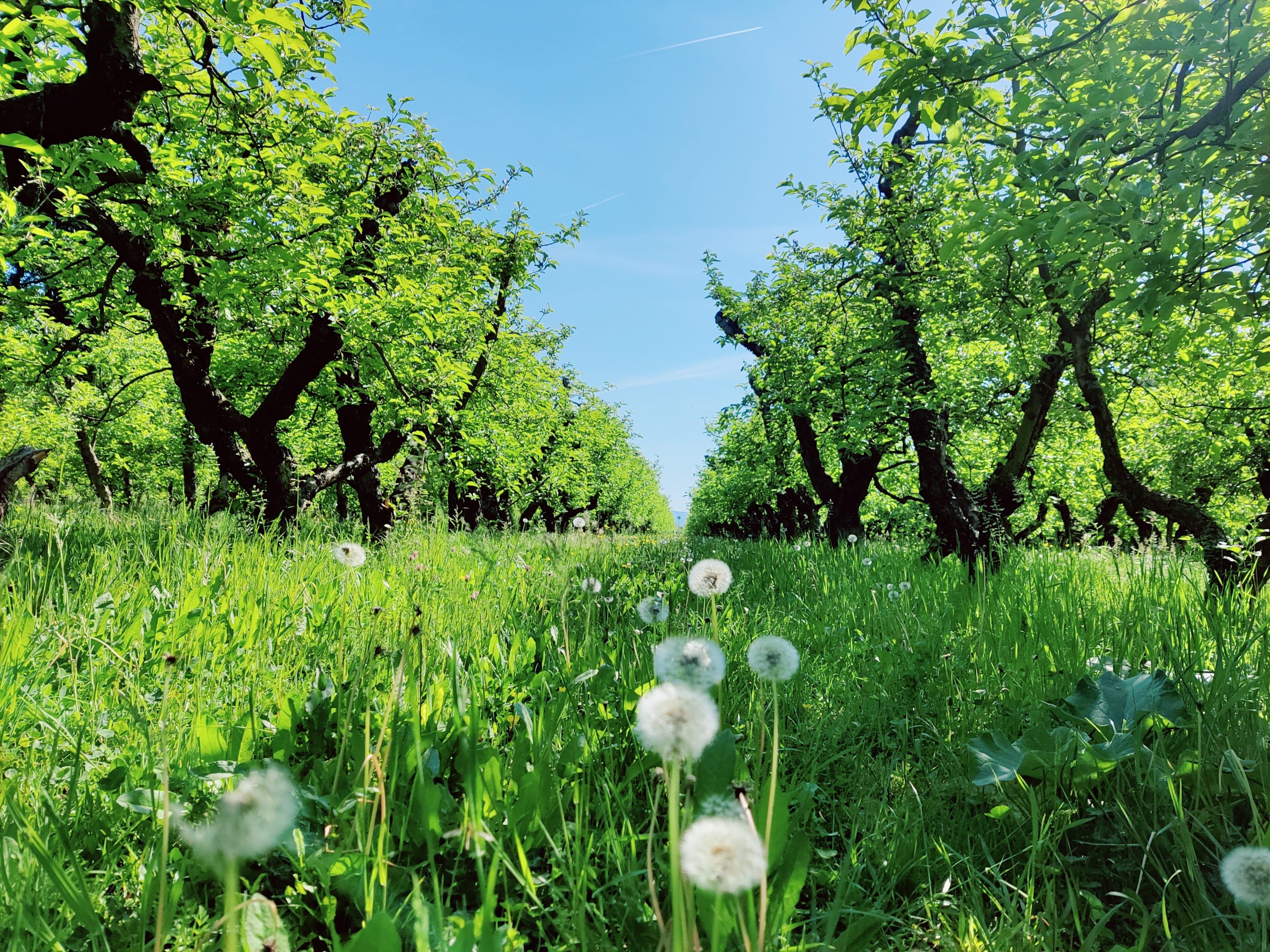
‘Flowering plants for parasitoids and predators of apple tree pests’
The plant species found at the edges or between rows of apple orchards potentially offer floral resources that are essential to hoverflies and parasitoid hymenoptera, two groups of beneficial insects that play a major role in the biological control of apple tree pests. However, the role of flowers in enhancing predation and parasitism of pests is difficult to demonstrate, particularly given our limited knowledge of the interactions between each plant species and phytophagous insects, the predatory and parasitoid beneficial insects of these phytophagous insects, and the predators and hyperparasitoids of these beneficial insects.
The objective
i) to study the trophic specificities of phytophagous species and beneficial insects for the plant species most commonly associated with apple orchards,
ii) to analyze the structure of communities of beneficial insects and phytophagous insects according to floristic composition and diversity,
iii) to characterize the trophic relationships of hoverflies and parasitoids with the entire community of phytophagous insects in the orchard.
The 2P3P project is based on a characterization of the floristic and entomological biodiversity within a network of 40 commercial orchards in the Lower Durance Valley, selected on the basis of contrasting practices in the management of flora at the edges and between rows.
