The Influence of Floristic Diversity on Ecological Networks Linking Pest Insects, Their Natural Enemies, and Ants in Apple Orchards
Date : 01/01/2026 – 01/01/2029
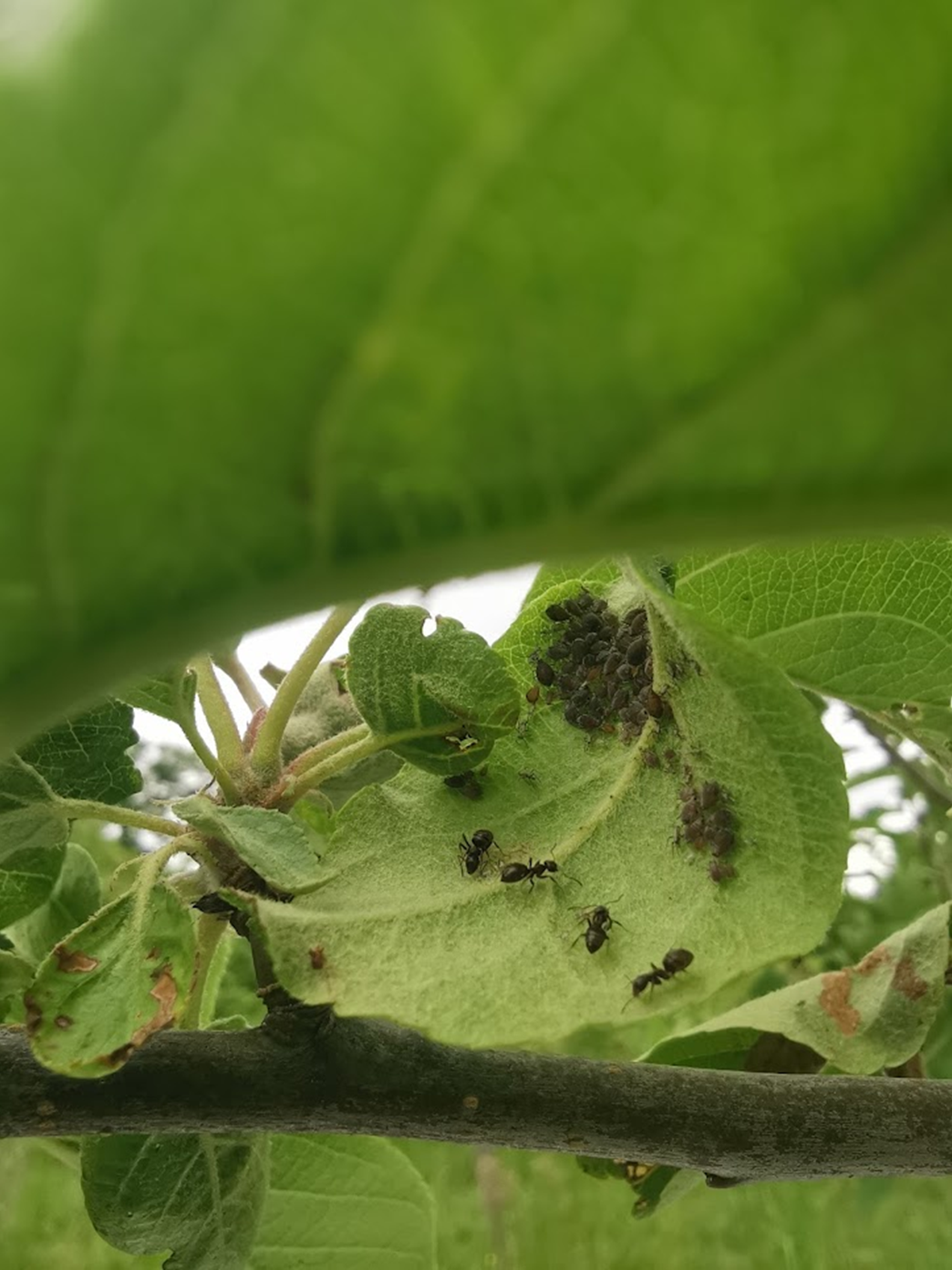
Conservation-based biological control is one of the alternatives to pesticides for controlling populations of crop-damaging insects. It involves adapting agricultural practices and managing agroecosystems to maximize the natural control of target pests by their natural enemies (predators, parasitoids, pathogens, etc.). However, for certain crop-damaging insects such as the apple aphid (Dysaphis plantaginea), a mutualistic relationship with ants hinders natural control by natural enemies. Indeed, ants invade aphid colonies, thereby protecting them from their predators, in order to exploit their honeydew, which is rich in sugars and amino acids. Biocontrol through conservation in this context must therefore involve a way to limit this mutualistic interaction. Planting a host plant—the field pea—between the rows of apple orchards is a promising solution, as by providing alternative sugar sources (nectar, other aphid species), the field pea could divert the ants away from the apple trees.
Based on data collected from a network of apple orchards—some of which are located in the lower Durance Valley—this dissertation aims to test the effects of establishing this field of field beans in the orchards. First, the study examines the presence of aphids, their natural enemies, and ants in the colonies; second, it investigates the mechanisms regulating the gray aphid population through molecular analysis of the stomach contents of predators and Bayesian modeling of aphid population dynamics.
Funding through the PEPR EcoContol program